The Devil Wants Content
Miranda Priestly is back, and she knows what gorpcore is

Today’s post will discuss some spoilers for The Devil Wears Prada 2. Proceed with caution.
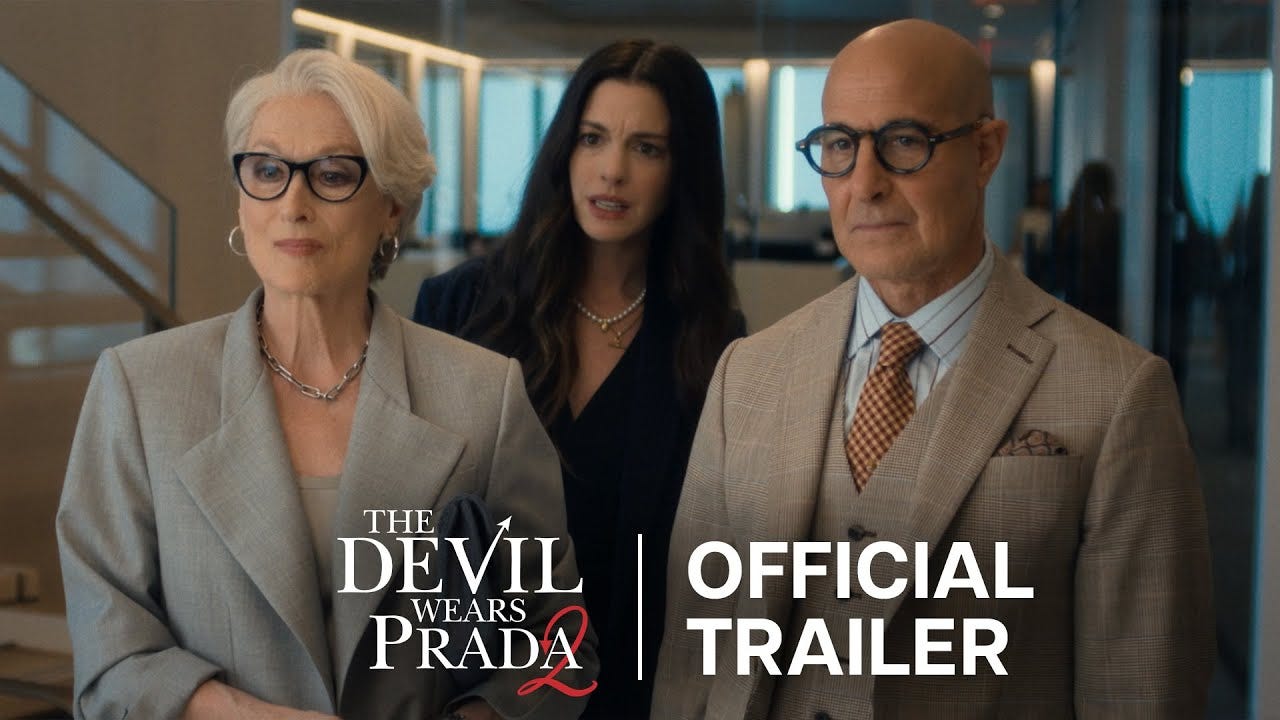
The Devil Wears Prada 2 begins at a journalism awards event. Andy Sachs, now a serious journalist (though, having clearly learned some lessons from her time at Runway, a very-well dressed one) is waiting to find out if she’s going to win an award. But then the phones around her start beeping. She and her team have been laid off by the massive corporation that now owns their paper.
I went to the theatre for the “magic” (TM Nicole Kidman) of enjoying the reheated version of the comfort movie I often watch while doing chores. Instead, I got slapped in the face with a scenario I’ve born witness to, too many times. When I was the managing editor of J-Source, I attended an award ceremony after reporting all day on layoffs at one of the major Canadian media companies. Around me, people from banks and hedge funds clinked glasses while their financial contributions to journalism were celebrated. Meanwhile, hundreds were wondering where their next pay cheque was going to come from.
So I was definitely intrigued when I heard that The Devil Wears Prada 2 was a reflection of the current media environment. Miranda Priestly is getting “cancelled” at the beginning of the film—though the crime isn’t her bad behaviour to employees, but rather featuring a designer who uses sweatshops. (If only that were a cancellable offense.) We see the great lady forced to sit through meetings where editors say words like “metrics,” “views” and “gorpcore.” Andy spies Miranda struggling to take off her own jacket—she’s no longer allowed to toss clothes at the assistants.
What made the first film endure, aside from the amazing acting performances, was how it played with aspiration. “A million girls would kill for this job,” Nigel tells Andy, a phrase oft-referenced in the sequel. The thing is, that was true in 2006. In the 90s and 2000s, working in magazine publishing—particularly fashion magazines—was a dream job because of how the roles were glamourized. Everyone knew the stories of editors being chauffeured around in town cars to fashion shows, of massive beauty and clothing closets, of meeting celebrities. Magazine editor was often the chosen job of romantic-comedy heroines. (Though, like Andy, they often would end up quitting to pursue more “serious” work by the end of the film.)
That’s because The Devil Wears Prada sliced through that aspiration to show the very real, very tough conditions many staffers toiled under. Yes, it’s played for comedic effect, but editors really did expect everything from staffers. The book the film was based on was written by Lauren Weisberger, a former assistant to Anna Wintour. Whether or not you buy her depiction of her former boss, the systemic issues of overworked and underpaid editorial staff in fashion magazines at true. In the mid-2010s, many interns and young workers across North America started pushing back, starting the first wave of 21st-century union organizing in media.
In The Devil Wears Prada 2, all those sharp edge sanded down. Andy, back at Runway as the features editor, smiles fondly at what should probably be horrible memories and worries that Miranda…is no longer abusing the people around her anymore? When Runway comes under threat of closure, the saviour ends up being benevolent billionaires. The film frames it as a win for real journalism. But it doesn’t inspire any warm feelings in me, given billionaires track record when it comes to owning media outlets.
But the main thing that the film skirts around is that most kids don’t aspire to work in fashion magazines anymore—if anything, they want to be fashion influencers, who now live the glamorous lives the editors once did. Content is king, and we are constantly trying to pump out more of it to see what will hit.
I realized, after leaving the theatre and walking by an a sign noting that Cineplex was out of the Devil Wears Prada popcorn buckets, that The Devil Wears Prada 2 is just more content. The main goal of the film is providing easter eggs that people can turn into TikToks and gifs Look, Andy is wearing cerulean again! Emily is bitchy again! Miranda Priestly finally smiled…again!
According to Amy Odell, Wintour’s biographer, Vogue staffers were neutral to horrified on the portrayal of their boss in Weisberger’s book. Later, much of the fashion industry refused to work with the first film production out of fear of crossing Wintour. Odell reports that, at least publicly, Wintour was mostly indifferent to all of it. However, once the first film came out, all of a sudden Wintour was also a star.
Now Wintour is on the cover of the magazine with Meryl Streep in costume as Miranda, not to mention all the online content Vogue did in advance of the movie releasing. The film has brand deals with Starbucks, Google, and—gasp—Old Navy. What would Miranda say? And at American movie theatres, you could even buy a real issue of Runway.
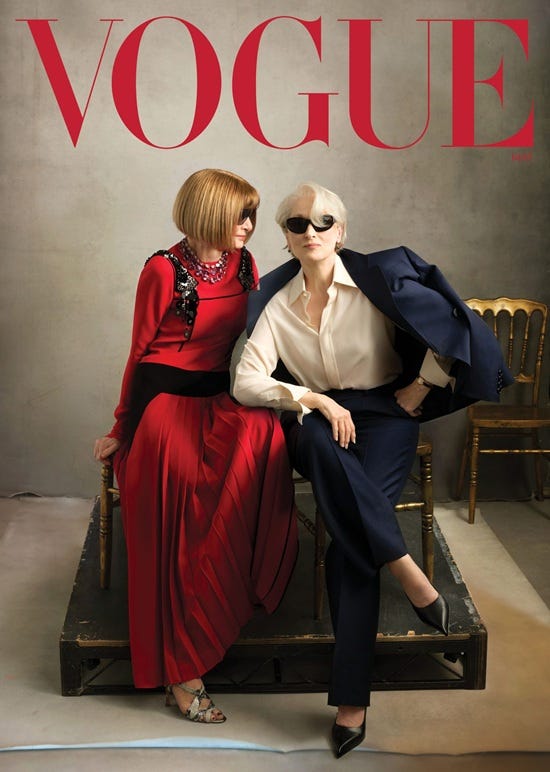
The Devil Wears Prada 2 does exactly what the first one did in holding up a mirror to the media environment. Except this time, it has nothing to do with the plot—it’s about the opportunity for content that the film represents.
Plucky Notes
The Seattle Times Union has been in contract negotiations, and it seems like a real sticking point is going to be AI in the newsroom. Expect this to come up more and more.
Have you been avoiding the news? Well, you’re not alone. A new study has found that most people are stressed out by news that isn’t local news.
Another day, another lawsuit against Meta. This time, five publishers—Elsevier, Cengage, Hachette, Macmillan and McGraw Hill—along with one author are suing the tech giant for using their books to train large language models.